IQOS (Philip Morris Romania)
IQOS Club: a loyalty platform grown into a community app, fully rewritten and relaunched on time
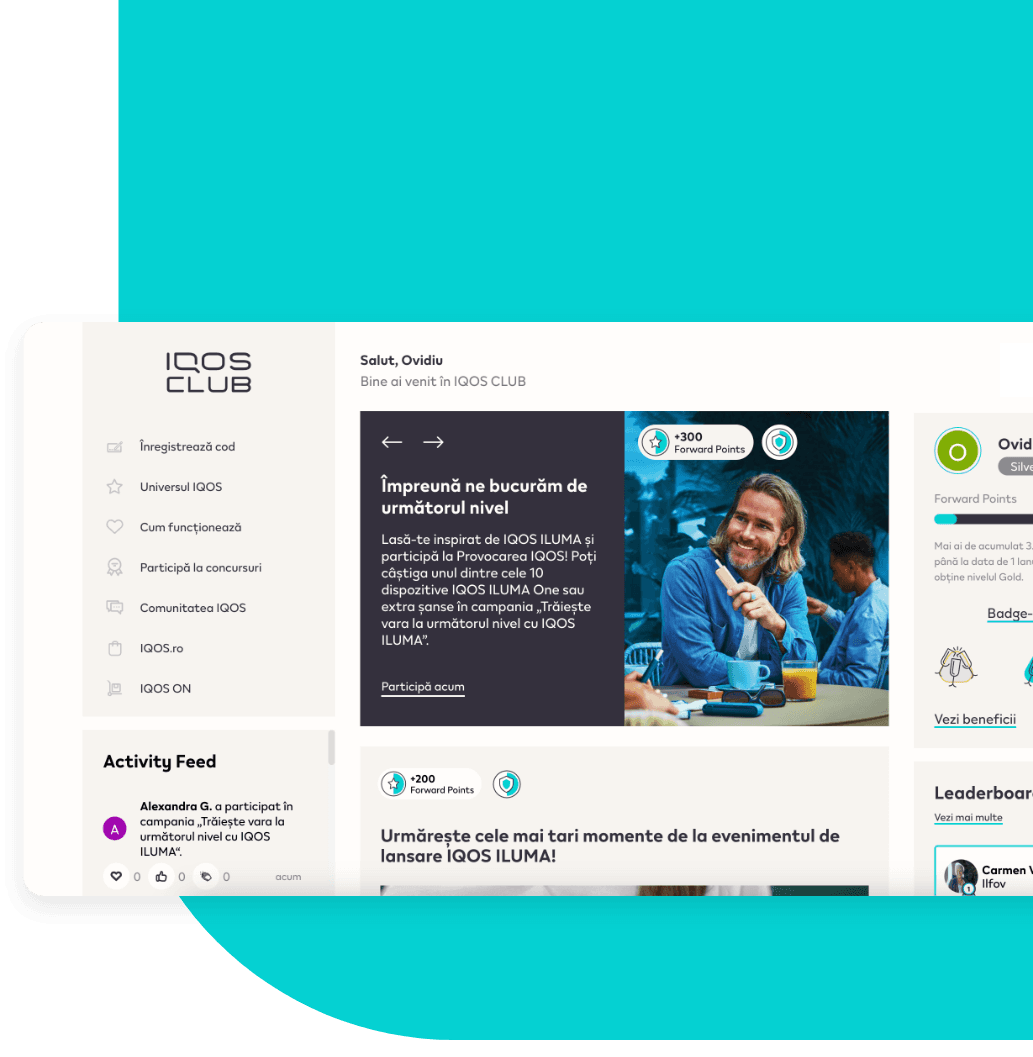
Since 2016, Grapefruit has built and evolved IQOS Club for Philip Morris Romania, a gamified loyalty platform for referrals, points and rewards. In the latest version, an 11-person team rewrote 100% of the code as a TypeScript progressive web app, added member-to-member messaging and community features, and launched on time.
Key results
Results being verified
We only publish numbers the client has confirmed. The outcomes for this project are being verified; the scope and deliverables below are final.
Context
Overview
Context
Boosting the digital experience for the members
The Club’s purpose was to create a virtual space that offers genuine experiences for its users. From profile personalization to interaction with other club members, and even joining monthly challenges, each user could find activities matching their tastes or needs. Moreover, being a club member came with a wide range of exclusive rewards and benefits.
The end goal of the IQOS loyalty platform was to encourage engagement among users, increase user motivation through gamification tactics, and build new in-app features (including events, rewards, and even member-to-member messaging).
Context
Why a loyalty platform
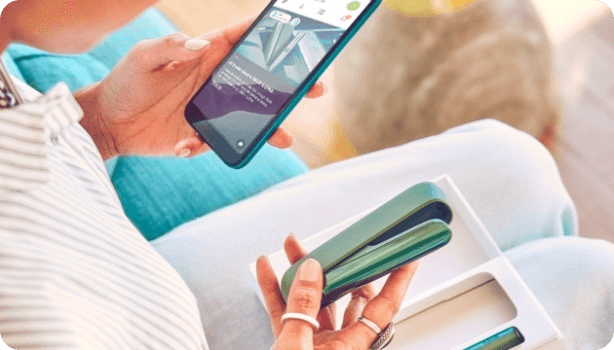
This platform would be a personalized space where our users could directly interact with the brand, get in touch with other like-minded users and gain rewards. We would offer custom experience based on the user’s level of engagement: gain access to special events, designer products and exclusive offers.
In return, they would have to test new features, share their experience with our product, and refer new users. The more they interact with the platform, the more often they interact with our content, the more benefits they gain.
From a transactional point of view, the platform can attract and maintain users through witty gamification techniques. On the other hand, users become loyal customers and brand ambassadors through status driven symbols: personalized content based on the products they purchase, the customer journey to higher levels, unlocking access to more and more benefits.

Process
User flows
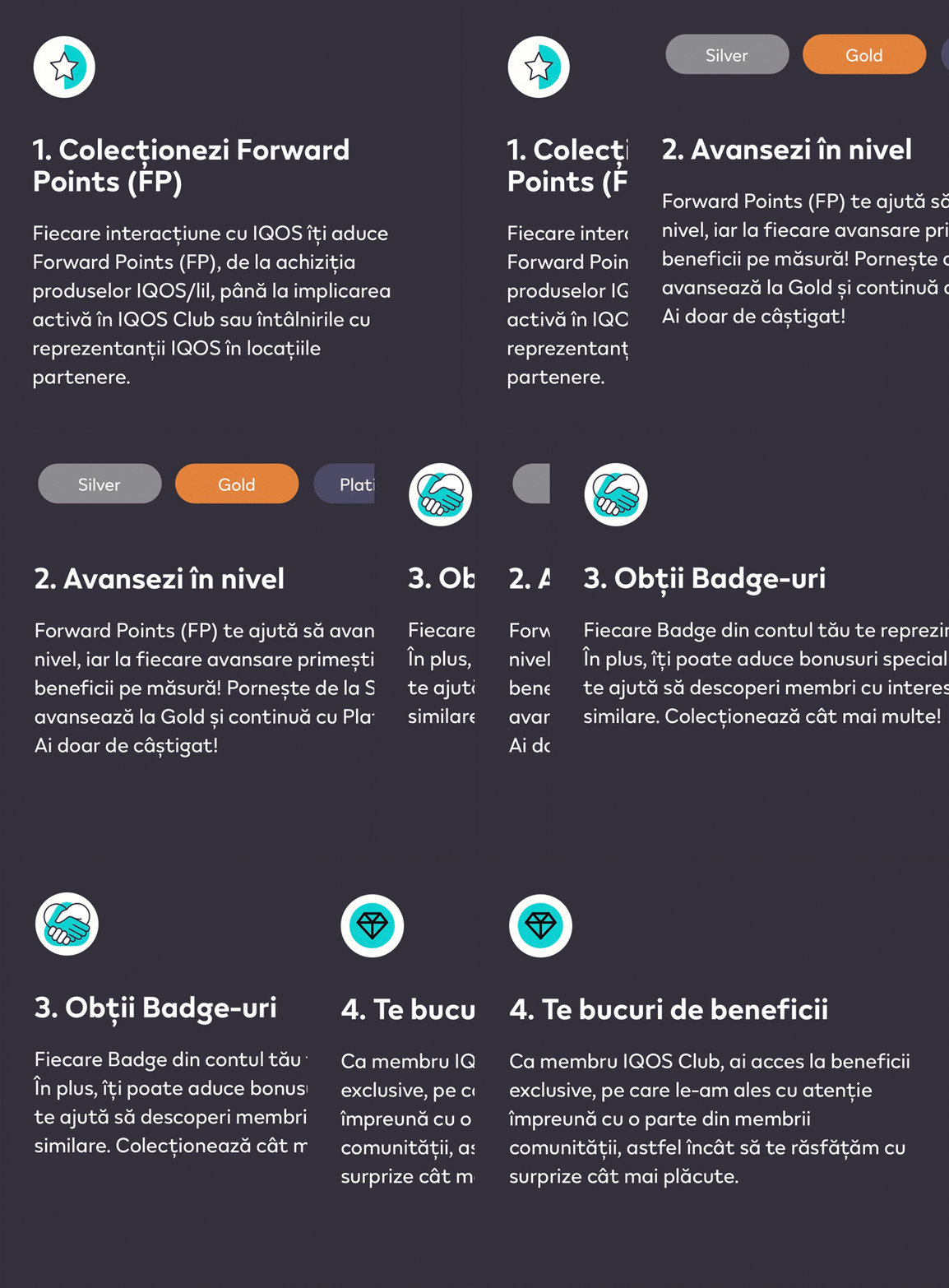
A user can gain points from referral, subscriptions, direct purchases, and entering product codes. Each of these activities correspond to a certain level of user engagement and directly match one of the company’s objectives.
For example: referring new users into the platform is the key feature in the flow and therefore comes with the biggest reward. The reward for on-boarding new customers grows as a user brings more and more friends into the platform.
Subscriptions and purchases are also well rewarded since they imply returning customers. There is also a low-key feature designed to appeal to lesser engaged users, a recurring activity that can be done with minimal effort: logging in the codes from products (each product comes with a unique 9-digit code). Developing such a feature might seem like an unrequited effort, but it is an efficient way to convert less engaged users.Another key point in our gamification plan is the token acquiring system which implies users participating into community related activities. This strategy corresponds to the community growth objective and creating trust.
The secondary dimension of our loyalty program is translating user engagement efforts (acquiring points) into rewards (spending points). A user can transform their points into custom discounts, to redeem free products or to order exclusive luxury products and partner vouchers.
Top-tier users also gain access to free trials with new products, premium experiences, invitations to events and major discounts for new product launches.

Implementation
Developing a modular loyalty platform
“Hey guys, our client’s got a mind-blowing idea for a big project” our lead strategist yelled one morning in the office, knowing we’d start defining the user journeys that same day. We drew from our previous experience with modular design and development to define the MVP, scaling strategy and future functionality for the program.
We had several concerns including data security, acquiring users and managing the emerging database. We wanted to offer a truly personalized experience for each user, therefore we had to individualize each scenario a user could encounter.
The first features of the platform included a simple 2-point gamification system: gather points – spend points. The system grew and gained more functions in time, but it was important for the first launch to be as intuitive as possible.
Aside from the user referral and collecting codes, the first iteration of the platform included an educational component, for the purpose of awareness on the innovative specs of the product. We also focused on creating engaging content: impressive graphics, video and animation.Front-end wise, we started development with Vue.js components inside Blade, the template engine provided by Laravel, for its capability to efficiently render the dynamic data from the back-end. For the back-end, we were happy using Laravel, since it’s a very stable platform and highly effective when it comes to development tools.
We soon shifted to React, for clarity, better organizing and template creation. It was a sound decision considering we added further functionality and scaled the project.
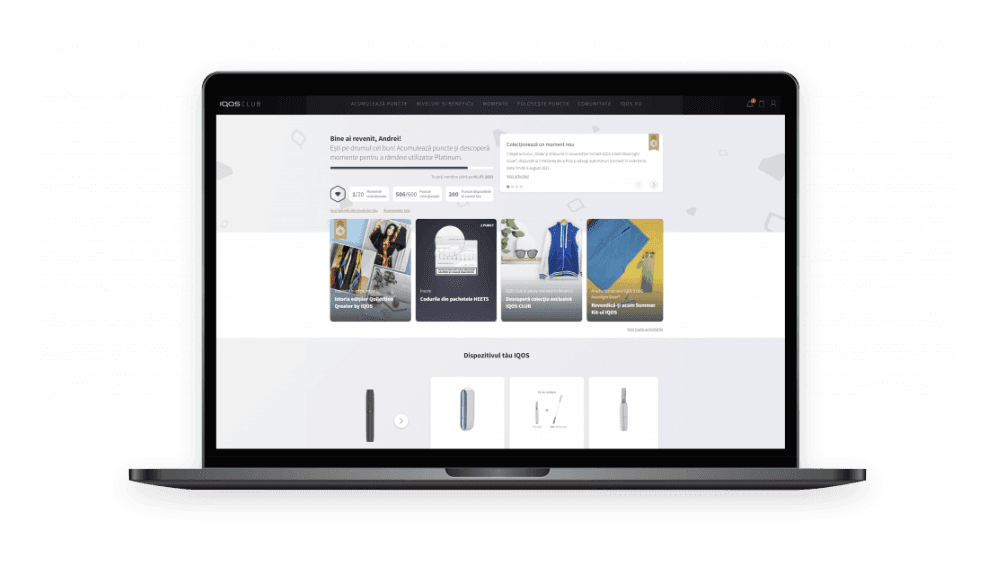
Content modifications are handled through a custom-made CMS, developed in-house. Allowing us to manage the web shop, moderate user generated content, assign and control points, the content for the organized contests and activities, and cover security aspects. We keep up with third party integrations for storing user login data, managing the web shop product logistics and collecting/spending points.
“One of the challenges in this project was to make sense of all the third party integrations and to build a smooth system”, our colleagues say. “It is of paramount importance, if you wish to offer a truly personalized experience for the users”.
Solution
Building a progressive web app
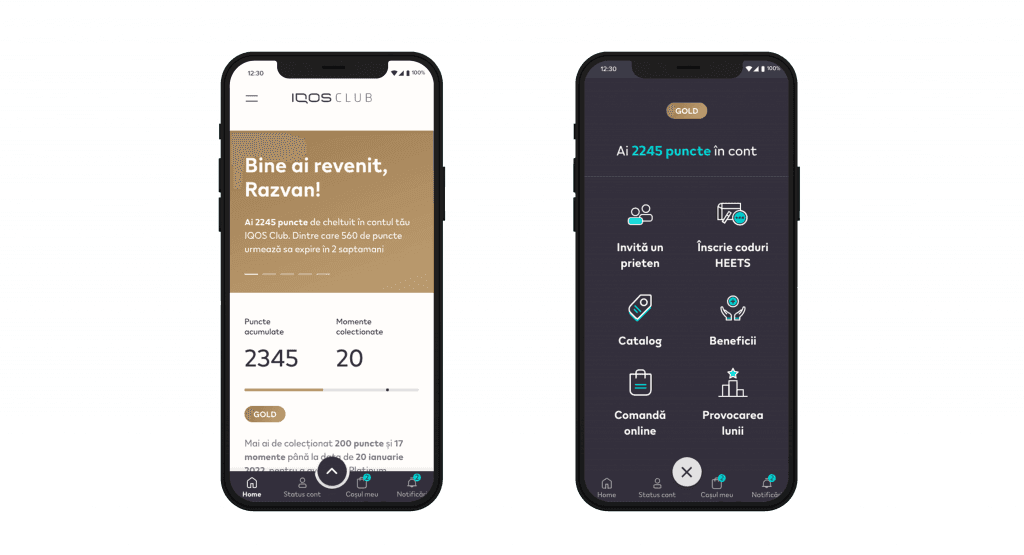
Surveys indicated the majority of users accessed the platform via mobile devices. They would have preferred an app-like experience to skip the login process and swiftly access the content. However, one of the main issues was the high frequency of uploading new content and features, which was once every two weeks.
Implementation
Team work and team management
Since the beginning of the project we have created a dedicated team including front-end developers, back-end developers, digital strategists, UX/UI designers, content managers, QA testers, and of course a project manager and account manager. That says we offered the full spectrum of our services.
After the initial launch efforts, in 2017, the project has gone through ongoing improvements and developing new features. We work in two-week sprints, daily stand-ups and weekly status meetings.
Challenge
The goal: a new version of the loyalty platform
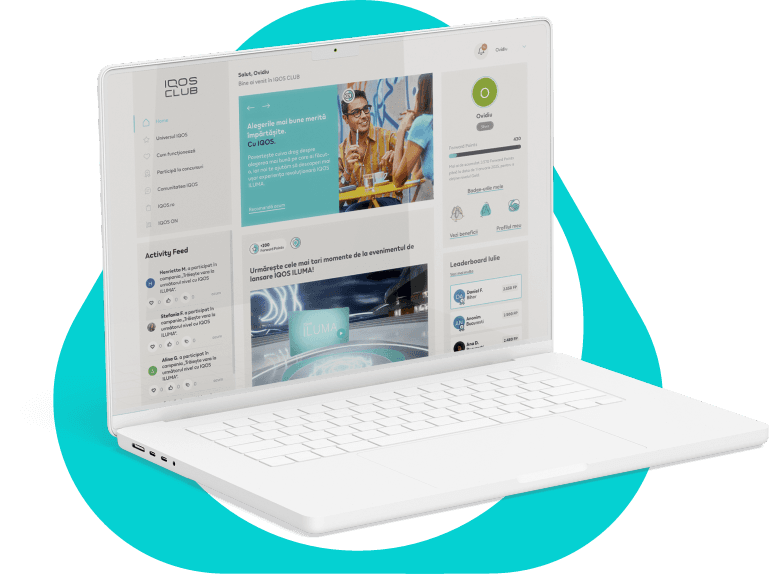
• Updating existing in-app functionalities by taking into consideration a new look and feel and new UI elements;
• Developing new functionalities to support the business and user goals (e.g. in-app member-to-member messaging).
The goal of the new version of the loyalty platform was to give users reasons to play, offer them meaningful and personalized experiences, and reward their engagement with the brand and the platform.
Process
Methodology and timeline
In the first two months (September & October), we focused on clarifying the functional requirements of the new features to get a better overview of the backlog. We chose 1 front-end lead and 1 back-end lead to handle any technical challenges within their respective areas. They were also in charge of providing support in discussions about architectural changes and data flow modifications with other systems involved, in line with the client’s Information Systems departments.
“Knowing how important the launch date was, we planned recurrent - weekly hands-on sessions for refinement together with UX designers, client stakeholders, and project managers. All new user flows were subject to requirements elicitation in order for us to understand user interactions and the business logic behind them. This was also the timeframe when our backlog had a few spikes for us to identify the right 3rd party services that would help us develop new features. (Project Manager at Grapefruit).
We felt a true partnership between us and the client since they were open to prioritizing as we discovered new use cases. Together we decided what is truly needed for the launch and what is nice to have, and we can address it afterward.

Implementation
All eyes on: platform stability & streamlined user experience
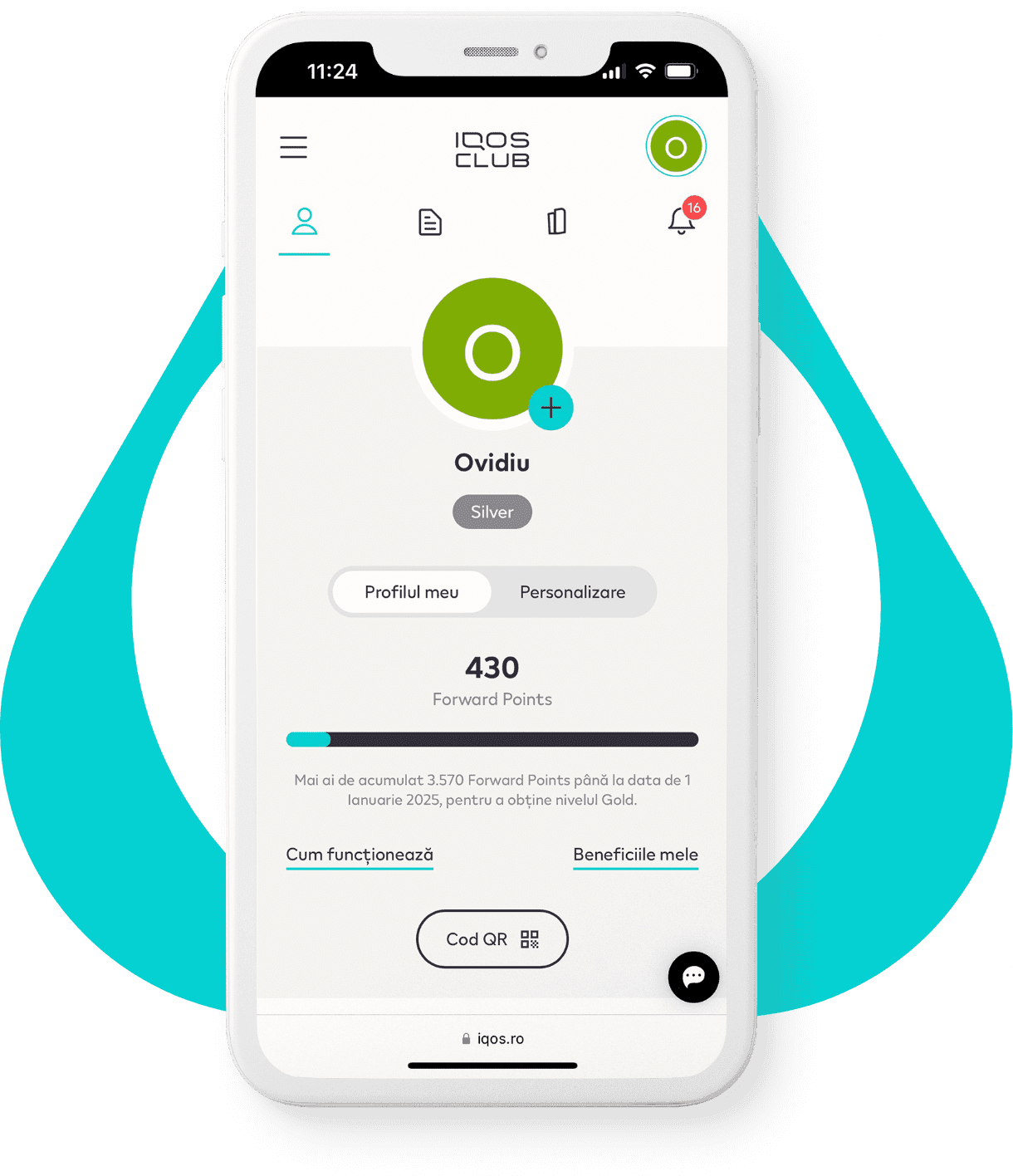
“The existing IQOS app required a complete rewrite due to the significant impact of the new functionalities on the data model, as well as the existence of technical debt. To ensure the technical stability of the platform and provide users with a seamless navigation experience, we decided to rewrite the codebase using an updated stack with TypeScript integration on the front end.” (Tech Lead at Grapefruit)
Process
Tech stacks & tools used in developing the new PWA
“Technical challenges were easily overcome and were mostly related to the learning curve of integrating third-party services. We chose to use an external service for a specific category of new and important features that aligned with the brand’s loyalty strategy. This approach allowed us to meet the deadline, which was critical for the client.” (Tech Lead at Grapefruit)
Furthermore, all essential integrations with third parties were extracted into separate packages from the main project, allowing them to be reusable in other future projects that utilize the same APIs.
Solution
Omnichannel brand experiences & launching new products
Due to our team’s dedication to the project and hands-on expertise in creating exceptional digital experiences, we managed to launch the new IQOS platform on time. This allowed our client, Philip Morris Romania, to carry further omnichannel brand experiences, supported by launching new products and offline events for its community.

What happened next
Code rewritten 100% & new platform features
Working with Philip Morris Romania on improving the digital user experience of its platform represented a unique and intriguing experience for our team. Throughout the process, we’ve learned that every challenge has a solution, as long as you’re determined to find it. Although we’ve had many stakeholders involved in the process of clarifying new user flows for the PWA, our team’s organizational skills exceeded everyone’s expectations. We’re proud to state that we’ve rewritten the code 100%, taking into account one of the client’s most important requirements: implementation speed. The updated version was launched on time, with new features meant to help Philip Morris Romania increase user motivation and engagement.
What we delivered
- Gamified loyalty platform: referrals, points, rewards
- Custom CMS for shop, contests and user content
- Progressive web app
- Full codebase rewrite with member-to-member messaging
- Analytics tracking plan
Gallery
IQOS (Philip Morris Romania) project visual: User flows 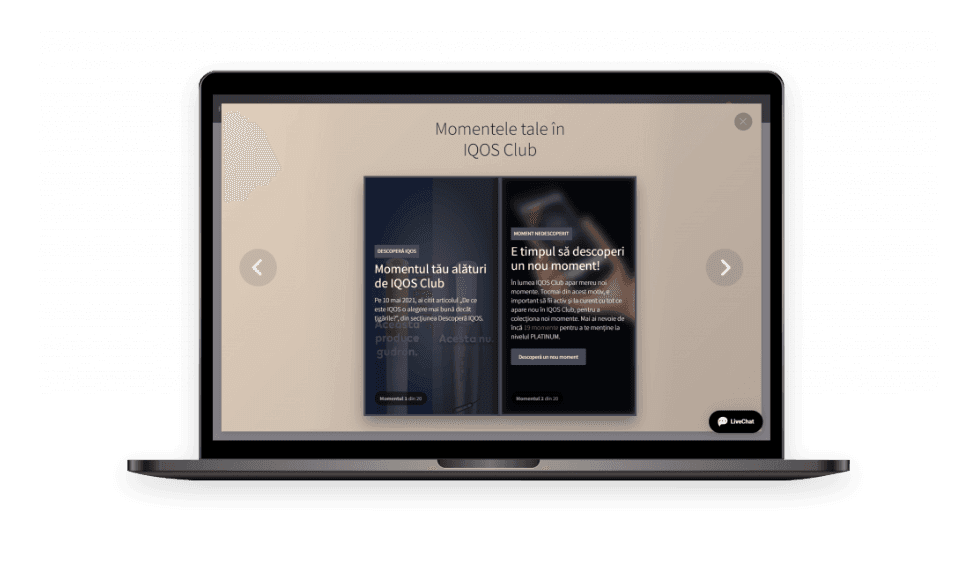
IQOS (Philip Morris Romania) project visual: Developing a modular loyalty platform