Search in the AI era (SEO + GEO)
Is SEO dead? Stop asking, start optimizing
SEO is not dead, but CTRs are dropping. Discover the AIO strategies required to get cited by AI and demonstrate E-E-A-T authority.
By Grapefruit teamPublished Updated 9 min read

In this article
The short answer is “no, SEO is not dead”, at least not in the way that flashy titles like the one above make it sound. I have listened to many podcasts, read lots of articles and studies, to answer this question and a few others:
- Is SEO as we know it no longer efficient in creating brand visibility?
- What are the best strategies to make sure brands remain visible and relevant online?
- What are the new metrics we should follow?
While the principles and tactics behind traditional SEO are not obsolete, there is a significant shift in user behavior when searching for information online.
The “zero-click” reality: What drives the change?
The rise of generative AI tools (Google's AI Overviews, ChatGPT, Gemini, Claude, etc.) has fundamentally changed user behavior, accelerating the “zero-click” phenomenon. With AI Overviews displaying the direct response type of summary at the top of the SERP, many users will get their answers without making even one click.
Informational queries are most affected by this behavior, meaning that content designed for the top of the funnel (awareness-type content) is most at risk of losing clicks.
This shift calls for a different approach for brands to gain visibility online. The goal for optimization moves from "getting a click" (SEO) to “being mentioned/cited” (GEO or AEO).
The Impact: Studies show that around 60% to 69% of Google searches now end without a click to a third-party website. Click-Through Rates (CTRs) for traditional top-ranking links have dropped, sometimes by 30-40%, particularly for informational content.
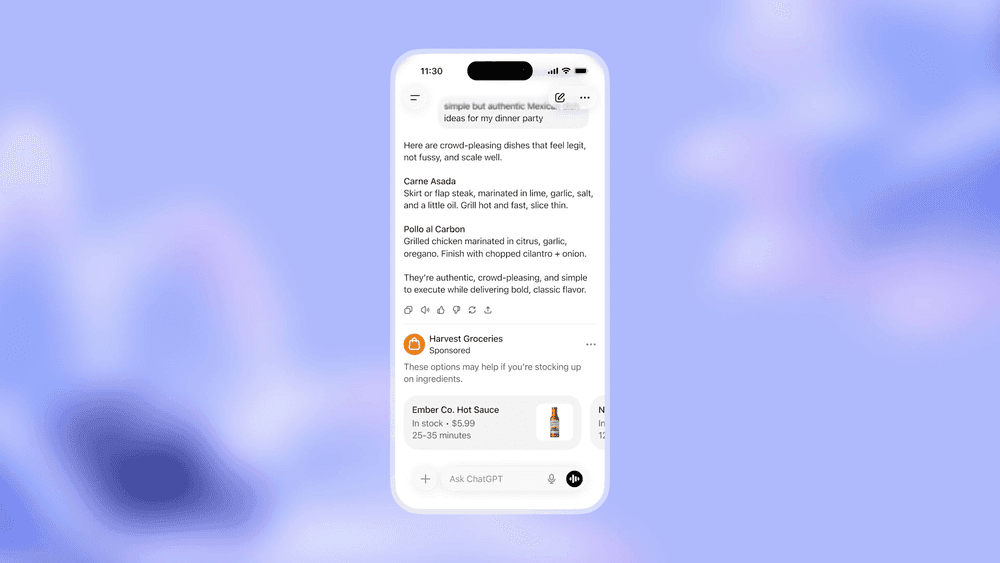
The New Goal: Optimization is shifting away from getting a click to getting cited. Your business must earn brand impressions and credibility directly within the AI-generated answer.
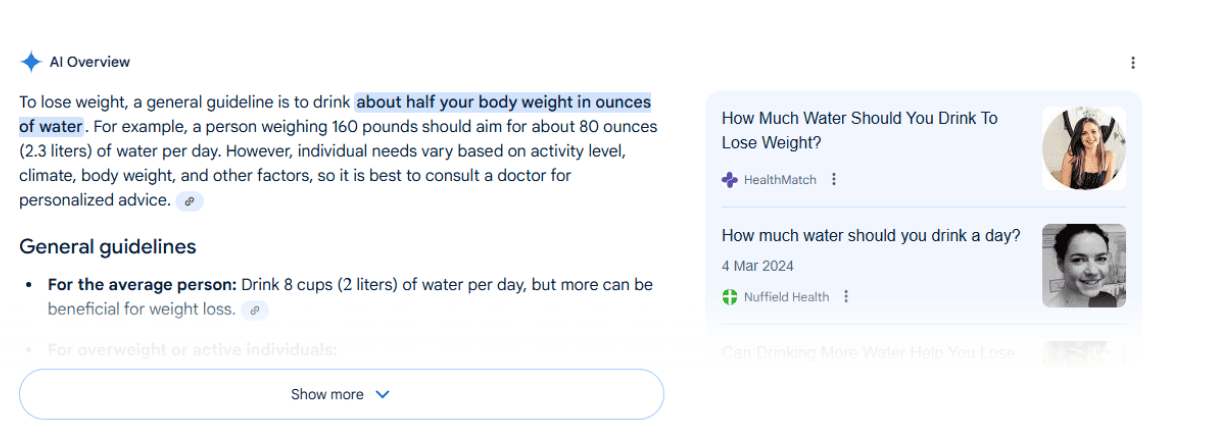
Google has confirmed that there is no secret tag or code trick to help you rank in Google SGE.
AEO, GEO, what are these acronyms?
Let’s make a quick stop to understand the abbreviations you may see around and which one you should target.
| Term | Goal | Core function |
| AIO (AI Optimization) | Overall strategy to ensure your digital footprint is discoverable by AI. | AI finds you. |
| AEO (Answer Engine Optimization) | Structuring content to be pulled into quick, direct answers (like Featured Snippets or AI Overviews). | AI provides quick answers. |
| GEO (Generative Engine Optimization) | Crafting content to be selected and mentioned when AI is making recommendations or comparisons. | AI mentions you. |
| LPO (Location Performance Optimization) | A subset of AIO, critical for location-based businesses to ensure visibility on maps and in local AI results. | AI knows where your business is. |
What changed in the customer journey?
The customer journey is becoming faster, more direct, and reliant on a single, curated answer rather than a list of links.
In the traditional SEO journey, user behavior is defined by the need to "Search and Sift" through a list of options, manually visiting and comparing multiple businesses.
The trust signal (user to brand purchase) driving the user purchases was mainly the link authority and high organic ranking.
The AI-led Journey begins with an “Ask to Act” mindset, where the user inputs a natural language question (or voice query), receives an instant, curated AI Overview/Answer, and acts on that single recommendation.
The trust signal (AI tool to brand mention) is primarily based on AI Citation/Inclusion, and the brand's clear E-E-A-T (Experience, Expertise, Authoritativeness, Trustworthiness) and invisible brand exposure (being cited without a click) become key metrics.
What are the best strategies for AI discoverability?
To make your brand as visible as possible for generative AI tools, your business’s digital footprint should be:
- Machine-readable: most LLMs scan the pages of your website, so ideally, your website should have structured data and structured content that AI can easily parse.
- Consistently accurate and contextually relevant: as far as content goes, AI loves conversational text, natural language, and consistent information.
- Socially validated: measured by reviews, organic references, comments, or testimonials.
How to optimize your business’s online presence
AI and LLM algorithms are known to prefer well-structured data and content, thorough technical buildup, and trusted outside references to promote a brand. As a digital marketer, you should consider these main pillars for optimization:
Ensure a frictionless website build
- Make sure your website is crawlable. Enable the OpenAI and Google robots to crawl your website to ensure its discoverability;
- Check that your website is schema markup ready. AI tools can determine the contents of your website by “reading” the page; the more explicit the language is, the easier it is for the robots to scan. Use organizational schema in headers, which tells AI about your brand, logo, social sites, as well as specialized schema, like [article], which indicates search-optimized content, like blog posts (publication date, author, headline);
- Accessibility standards make your content easier to identify. For example, alt descriptions to images or transcriptions for videos instantly tell robots what type of content you are displaying;
- Make your website readable in both HTML and JavaScript. Most AI tools can only read raw HTML for now, while advanced search engines can easily interpret JavaScript as well. Make sure your most important information is also found in HTML tags, not hidden in animations, videos, or images;
- Optimize your site structure and speed. Keep your main info just a few clicks away from the home screen, and use descriptive internal linking (hyperlink actual words from the text, instead of the word “here”).
Write content that AI loves
- The EEAT formula, short for Expertise, Experience, Authoritativeness, and Trustworthiness, shows text attributes that AI tools analyze in deciding whether a brand is relevant to a certain query or not. Act as fact-checkers and authorities who refine and validate AI-assisted drafts. Deliver high-quality, localized, and real-time content that answers customer questions;
- Offer factual content, rather than promotional fluff - such as “Prices start from 50$ Premium version…” instead of “Our prices are competitive”;
- Align with search intent - optimize your content based on user intent, rather than keywords. Cover a topic comprehensively using natural language, since AI understands context and meaning (semantic search), not just keywords;
- Keep the tone conversational, publish decision-making guides, comparison pages, breakdowns, reviews, and alternatives to products. An AI query will be a quick and direct answer to a question, so it will be more likely to quote your website if the content is already there, in the form of FAQs, Pros and Cons etc.;
- Natural language is more likely to surface in AI queries. Avoid oversaturating your content with keywords. Use synonyms or a natural variety or related terms, like a semantic web around your topic; don’t repeat the same keywords throughout your text;
- Keep a clear hierarchy and text formatting. Similar to SEO best practices, you should maintain consistency in heading hierarchy and organize your content in numbered lists or bulleted lists when appropriate.
Be visible everywhere AI scrapes
- Generative AI tools pull data from across the web, including reviews, search histories, business directories, and more. To ensure your brand appears in AI responses, maintain a consistent presence where AI sources information.
- Make sure your business information is accurate and consistent across key platforms:
- Google Business Profile, Apple Maps, and Bing Places;
- Review and local listing sites like Yelp, TripAdvisor, Trustpilot, or G2;
- LinkedIn Business Pages, Crunchbase, and Wikidata entries;
- Be present in voice and AI assistant ecosystems, such as Google Assistant, Siri, Alexa, or Cortana;
- Engage on social and niche platforms relevant to your industry: LinkedIn, Reddit, GitHub, Medium, or Dribbble.
- Don’t forget structured data and backlinks. You can request to be featured in blog posts, reviews, podcasts, and make sure the backlinks direct to relevant pages on your website. Structured references aid AI tools in understanding context, entity, and relevance.
- Keep your NAP (Name, Address, Phone number) consistent and up to date on all directories AI algorithms treat this information as a trust indicator; search engines and generative systems might exclude your brand from results, if the address differs across listings;
- Request to be featured on maps, in directories, voice assistants, and more. Omnichannel visibility and consistency is critical for AI search discoverability.
Prove authority and trustworthiness
- Build a favorable online reputation. Reach out to customers for reviews, citations, and consistent brand validation. Be responsive and helpful to your social media followers;
- Attract references or reviews from trusted sources, such as blogs, Yelp, Apple Maps, LinkedIn Business Pages, IMDB, PubMed, CrunchBase, as well as inclusion in “Top best…” lists. Hint: WIKI Data is a surprisingly helpful source for your brand’s visibility. You may not need to have a page, but just being mentioned or cited can boost your online visibility;
- Acquire backlinks from reputable websites, even text mentions, they are the base layer of online authority.
Provide seamless User Experience
- Develop your website mobile-first;
- Check the loading speed, technically optimize local pages to support frictionless AI indexing and user experience.
What are the new metrics we should follow?
We’ve already seen how the customer journey changes from manual search to receiving curated content, so as a brand, watching website traffic is no longer a trusted way to measure the success of your SEO efforts.
The metric that matters now is Brand Mentions.
Use AI Tracker Tools: Deploy tools that specifically monitor when your brand, product, or content is cited as a source or recommendation within generative AI search results (AI Overviews, chatbots).
LPO (Location Performance Optimization) Success: For local businesses, success is measured through by accurate map visibility and positive review volume, which directly feeds the Authority (A) signal.
I’m a Digital Marketer, how can I make sure my strategy is AI-ready?
The modern digital marketer's strategy is now omnichannel brand authority and content structure.
- Shift focus from CTR to influence: Success is now measured by metrics like "share of voice in AI Overviews" or "AI citation rate," rather than just organic traffic.
- Become a conversational content architect: Content must be created to answer specific, conversational queries (how people speak), not just short keywords (how people type).
- Prioritize E-E-A-T and Trust: Given the concern about AI "hallucinations," AI algorithms place a high value on verifiable expertise and trust. As a marketer, you should:
Ensure all content is fact-checked and backed by credible sources.
Actively solicit and respond to customer reviews (which AI summarizes).
Maintain a consistent content cadence (regular publishing) to signal ongoing authority. - Audit message consistency: AI trains on data from your website, social media, press releases, and review sites. If your brand's story is inconsistent across channels, AI will struggle to establish you as an authority. Omnichannel consistency is key.
Takeaways
So, do any of these tactics sound familiar? They are SEO best practices at the core, but probably more thoroughly and consistently implemented.
The generative AI boom has forced a long-overdue reckoning in the world of online visibility. The battle is no longer for the top of the SERP, but for the right to be selected as the single, authoritative voice in a machine-generated answer.
If you are a consecrated brand, or even a young brand, the path forward is clear: be the trusted source that AI must quote. The fundamentals of SEO are your foundation, but AIO is the future-proof structure built upon it. Now is the time to optimize not for a robot, but for the intelligence that directs the human experience.
And remember, you are not alone in this! Your next step in optimizing your brand’s digital presence is to engineer your content creation for AI discoverability. You can explore our specialized AI content creation solutions on our website.
Hey, were you wondering if this article was AI-generated or written by a human? The human identified the rising concern, asked the questions, and decided which way this article should go. The rest was made by Gemini.
Oh, and the human also revised the whole article and modified where needed, before publishing it.