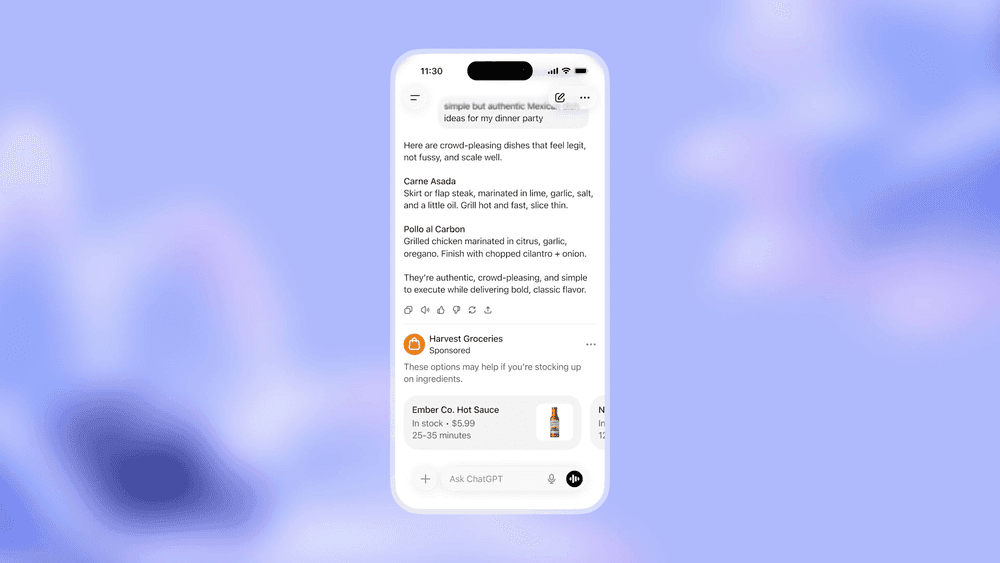
Search in the AI era (SEO + GEO)
SEO after AI Overviews: How brands stay visible in search in 2026
AI Overviews are reshaping search visibility. Learn how brands can adapt their SEO strategy, build authority, and stay discoverable in 2026.
By Grapefruit teamPublished Updated 4 min read

In this article
Search is changing faster than most brands expected.
AI Overviews, generative search engines, and large language models have shifted how discovery works. From ranked to synthesized answers.
Users increasingly get responses before ever reaching a website. For marketers, that raises a pressing question:
If users don’t click, how do brands stay visible?
The answer is not the end of SEO. It’s the evolution of SEO.
At Grapefruit, we see this shift as an opportunity for brands willing to rethink content, authority, and digital presence. Search visibility in 2026 will belong to companies that build trust, clarity, and relevance across every touchpoint.
What AI overviews actually change
Traditional search rewarded rankings. The new search environment rewards usefulness.
AI Overviews pull information from multiple sources and summarize answers before users ever scroll - significantly reducing clicks on traditional organic results. The majority of AI Overview results now end up without a click.
This means generic informational content is losing ground fast. Brands relying only on old SEO tactics such as keyword stuffing, volume-based blogging, or low-value landing pages will continue to lose visibility.
But this is only part of the picture. Total search usage, combining search engines and LLMs, is growing worldwide. The pie is bigger. The question is whether your brand earns a slice of it.
What still works in an AI-first search landscape
SEO remains the infrastructure layer. Answer Engine Optimisation (AEO) is the layer that adapts the infrastructure for answer-first environments. Both matter. Here’s what drives results: Authority and trust signals.
Brands with strong expertise signals, quality backlinks, consistent brand mentions, and trusted content are more likely to be surfaced in both traditional results and AI-generated answers. A strong brand presence across multiple platforms also provides resilience against algorithm changes.
Original, extractable insight
Generic content is easy for AI to replace. Content that explains concepts clearly, stays focused, and connects ideas naturally is easier for AI systems to work with and consistently outperforms content written only for traditional rankings. Unique perspectives, proprietary data, case studies, and expert commentary are significantly harder to replicate.
Structured, scannable content
Structured content meaningfully improves AI citation rates. Clear H2–H3 structure, comparison tables, concise definitions, and well-organised FAQs all help AI systems recognise your content as a reliable source worth surfacing.
Technical performance
Fast, mobile-friendly, well-structured websites still matter. Search engines and LLMs alike continue to reward strong user experience.
Brand demand
Users searching directly for your brand name remains one of the strongest visibility signals you can build - and no competitor can absorb.
How brands should adapt their SEO strategy
1. Move from keywords to topics
Instead of isolated pages around narrow terms, build authority clusters around strategic themes your audience is actively searching. Map content by intent, not just volume.
2. Publish real expertise
Thought leadership, client lessons, market analysis, and practical frameworks consistently outperform generic “how-to” content. AI systems favour content that can stand alone as a reliable, complete answer.
3. Strengthen your brand ecosystem
Successful SEO in 2026 requires integration across editorial, UX, PR, and product. Visibility also comes from LinkedIn, PR mentions, podcasts, newsletters, and trusted third-party platforms - not just your website.
4. Optimize for qualified conversion
Visitors arriving from AI-referred results tend to carry higher intent - they already have context from the AI answer and click through for a specific reason. That makes conversion quality more important than volume. When users land on your site, every page should guide them clearly toward action.
5. Track AI visibility, not just rankings
Measure changes in AI citation frequency, generative AI referral traffic, and assisted conversions, not just traditional ranking positions. With a growing share of search activity moving through AI interfaces, the metrics that matter are shifting. Your reporting should shift with them.
What this means for marketing leaders
The question is no longer “How do we rank first?”
The better question is: How do we become the most credible answer in our category?
That means treating search visibility as integrated infrastructure - one that touches revenue, brand integrity, content strategy, UX, and performance. It’s not an SEO team project. It’s a leadership-level decision.
Our perspective
At Grapefruit, we believe the brands that win in search will be those that combine technology with human relevance. AI may reshape discovery, but trust still drives decisions.
Visibility is changing. Value is not.
If you're rethinking your search strategy for 2026, we'd like to hear from you. Get in touch with the Grapefruit team!